1.9 M+companies in our trades in AustraliaYour request goes to the galvanizers in your area.
$0for your requestFree, no obligation, confirmed by you.
30 sto make your requestService, timeframe, town: a few clicks, and a professional calls you back.
Galvanizer nearby
Find a galvanizer for metal galvanising and industrial protection against corrosion and wear.
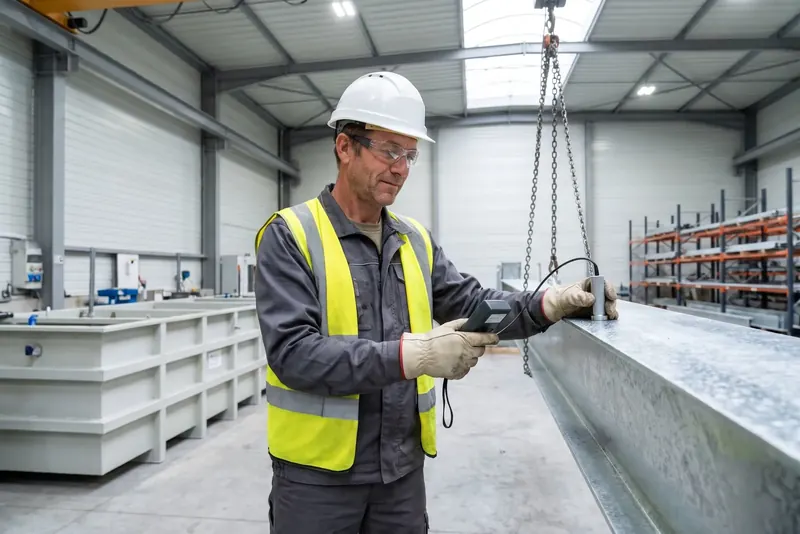
A galvanizer provides metal galvanising, hot‑dip galvanising and protective coatings for steel, cast iron and aluminium components. Their work offers durable protection against atmospheric weathering and chemical corrosion. Surfaces are prepared thoroughly through chemical pickling or abrasive blasting according to strict technical specifications. Steel structures are then immersed into molten zinc baths or coated with durable thermosetting powders following industrial standards.
Work is typically organised remotely between project managers and the processing plant. You provide your engineering drawings, schedules and specifications electronically. Telephone consultations or video calls let technicians check overall dimensions and suspension points. Sample test pieces can be approved before processing the full batch. Collection of untreated fabrications and delivery of finished components are handled nationwide via road freight.
Your areaEverywhere in AustraliaYour request goes to the galvanizers around you.
Your request · Galvanizer
Which service do you need?
Free · No obligation
Surface treatment and finishing services
Common service
Hot‑dip galvanising
Hot‑dip galvanising protects steel by complete immersion in a bath of molten zinc. This process is ideal for structural steelwork, street furniture and external metalwork exposed to the elements. The treatment forms a tough metallurgical alloy bond that resists physical impact. The facility applies relevant Australian and international standards to every processing batch.
Free · No obligation
Common service
Abrasive blasting
Abrasive blasting cleans metals using high‑pressure abrasive media. This critical preparation step strips away mill scale, legacy paint coatings and corrosion. It creates an ideal surface profile to maximise adhesion for subsequent protective treatments. The specialist selects the correct media grade to match the steel composition.
Free · No obligation
Common service
Powder coating
Powder coating applies dry polymer powder cured under heat to form a hard finish. This service suits manufacturers of architectural metalwork, industrial cabinets and external cladding panels. The process delivers superb scratch resistance alongside an extensive range of colours. Application follows comprehensive degreasing and surface pre‑treatment.
Free · No obligation
Common service
Epoxy coating
Epoxy coating provides robust barrier protection against aggressive chemicals, oils and abrasive wear. Available in liquid or powder formats, it is widely used on storage tanks, pipework and internal plant equipment. The pro applies specified layer thicknesses to match your exact technical schedule, followed by controlled heat curing.
Free · No obligation
Common service
Aluminium anodising
Aluminium anodising builds an integral protective oxide layer through an electrolytic acid bath process. This treatment enhances surface hardness and prevents corrosion without altering tight dimensional tolerances. It is widely specified for precision‑machined parts, window frames and building facades, available in natural or dyed finishes.
Free · No obligation
Common service
Corrosion repair
Corrosion repair restores industrial metalwork degraded by long‑term environmental exposure or moisture. The pro undertakes deep stripping to remove ingrained rust and chemical contaminants. Structural repairs are completed before applying fresh protective coatings, significantly extending asset life without replacing core material.
Free · No obligation
Common service
Railing galvanising
Railing galvanising shields handrails, balustrades and security barriers against outdoor corrosion. Metal fabricators rely on this treatment prior to site installation on balconies and walkways. Dipping ensures full zinc coverage across all surfaces, including hollow sections, provided suitable vent and drainage holes are included in the fabrication design.
Free · No obligation
Common service
Gate powder coating
Gate powder coating delivers a durable, smart aesthetic finish for steel and aluminium gates. It protects driveway gates and boundary fencing against intense UV exposure, chipping and heavy rain. Technicians apply exterior‑grade polyester powders before oven curing, following chemical pre‑treatment to guarantee long‑term coating adhesion.
Free · No obligation
When to call a galvanizer
K
Is this your situation? A professional in your area calls you back to discuss it.Free · No obligation
Review the technical proposal and the detailed stages outlined in the written quote or estimate.
✓Ask the professional for evidence of public and product liability insurance covering their industrial operations.
✓Confirm their compliance with relevant surface finishing standards.
✓Check bath dimensions and overhead crane lifting capacities to ensure your components fit.
✓Inquire about coating thickness testing and the quality assurance reports provided upon completion.
✓Ask to see examples of work completed for structural steel fabricators.
✓Avoid any provider that skips essential mechanical preparation or chemical pickling stages.
✓A reputable firm always reviews fabrication drawings carefully to ensure vent holes and drainage points allow safe, complete immersion.
What makes the price of a galvanizer
The total price depends primarily on the factors below. The exact price is the figure set out on your formal quote from the pro, tailored to your job.
What affects the price
Total weight and physical volume of components to be treated
Choice of protective coating and specified layer thickness
Level of surface preparation needed, including blasting or pickling
Fabrication geometry and need for vent hole modification
Good to know
Price rules vary by state and territory: the information on this page applies nationwide.
Get a call back from a galvanizer
For each service and each town, Kelki explains the essentials: the services, when to call a pro and pointers to choose well. With « Call me back », you describe your need in a few clicks: your request goes to a professional of the trade in your area, and you then deal with them directly.
Your requestFree
TradeGalvanizerLocationEverywhere in AustraliaServiceTo chooseTimeframeYou choose
A pro in your area calls you back · free
Your most common questions
How can I get an estimate for metal galvanising remotely?+
Email your job specifications alongside dimensioned drawings or digital CAD models. State the steel grade, estimated total weight, overall dimensions and requested finish. The pro assesses technical feasibility and provides a clear written estimate detailing preparation, bath processing, transport logistics and the total amount payable.
How is an off‑site surface treatment order managed?+
Once you approve the quote, untreated components are collected or delivered to the plant by freight carrier. Technicians carry out an initial intake inspection to check for defects and adequate venting holes. Parts undergo preparation and coating, are packed securely onto pallets or stillages, and are returned to your premises or site.
What documentation is provided after treatment?+
The pro supplies a delivery note and a certificate of conformity. This confirms adherence to relevant standards and records coating thickness readings taken across the batch. For regulated projects, material test certificates and inspection reports can also be requested to guarantee full component traceability.
How is the confidentiality of engineering drawings protected?+
Specialist industrial processors follow strict protocols to protect intellectual property. You can request a standard non‑disclosure agreement prior to sending proprietary drawings. Technical files are restricted solely to estimating and production teams, and files are never shared without your written consent.
Why are vent and drainage holes necessary for hot‑dip galvanising?+
Hollow sections must allow liquid zinc to enter and trapped air to escape when submerged at high temperatures. Without proper vent holes, internal pressure can cause components to rupture dangerously. Adequate drainage also lets excess molten zinc flow out smoothly upon withdrawal, avoiding lumps and uneven runs.
What is the difference between hot‑dip galvanising and powder coating?+
Hot‑dip galvanising forms an alloyed zinc barrier that protects steel metallurgically from rust. Powder coating applies an electrostatically sprayed polymer cured in an oven for colour and weather resistance. Both processes can be combined into a duplex system for superior corrosion defence in aggressive environments.
How do technical consultations take place?+
Discussions occur via telephone or video calls with the facility's production engineers. You can share drawings on screen to examine joint geometry, hole placements and suspension rigging points. These reviews ensure clear communication on tolerances without requiring an on‑site factory visit.
What agreement formalises a surface treatment order?+
Work is confirmed by accepting a formal written quote, followed by an official purchase order. This agreement outlines item descriptions, required technical standards, delivery terms and unit or tonnage pricing. Standard terms and conditions from the processing plant govern the engagement.
Need a galvanizer?? Get a call back.
Free · No obligation · Describe your need in a few clicks
GalvanizerEverywhere in AustraliaMetal galvanising request · Free · No obligationCall me back
K
Kelki AgentI connect you with pros in over 1,000 trades, in Australia.
Hello, I’m the Kelki Agent. Tell me what you need: I’ll find the right pro for you, close to home.
Messages are analysed by an AI to understand your need, and are not stored. Privacy
Cookies
We use cookies to improve your experience and analyse site traffic. About our cookies