7districts in IsraelYour request goes to the knife sharpeners in your area.
₪0for your requestFree, no obligation, confirmed by you.
30 sto make your requestService, timeframe, town: a few clicks, and a professional calls you back.
Knife Sharpener nearby
Find a knife sharpening service near you for kitchen knives, lawn mower blades, and specialty tools.
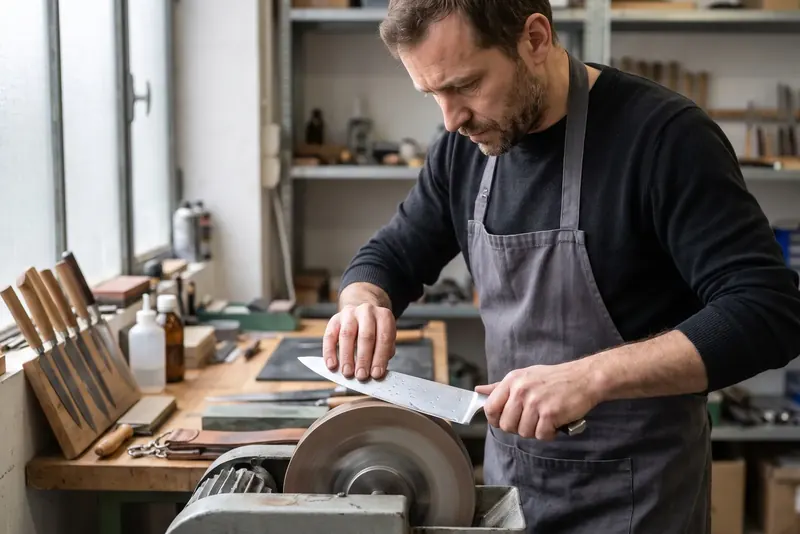
Whether you need a reliable knife sharpening service or an experienced knife sharpener near you, a local specialist restores dull or nicked blades to prime condition. These experienced pros work on everyday kitchen knives, shears, garden tools, and commercial blades. Using water‑cooled grindstones, abrasive belts or traditional whetstones, they reset the bevel cleanly without overheating the metal. Hiring a dedicated pro near you extends the working life of your cutlery and makes everyday slicing effortless.
Work is typically handled in a local workshop or via a mobile van offering on‑site service. The sharpener inspects the cutting edge, corrects minor bends and removes only the necessary amount of steel. You can drop your blades off or schedule a visit in your area. A clear price or estimate is provided before work begins, based on blade type and any repair work needed.
Your areaEverywhere in IsraelYour request goes to the knife sharpeners around you.
Your request · Knife Sharpener
Which service do you need?
Free · No obligation
Sharpening services
Common service
Kitchen knife sharpening
Kitchen knife sharpening restores the edge on blades blunted by regular food prep. The specialist sharpens paring knives, carving knives, and serrated bread knives. They remove micro‑chips, recreate the original factory bevel angle, and finish with a clean polish. Ideal for home cooks who want to slice clean through food without bruising produce.
Free · No obligation
Common service
Scissor sharpening
Scissor sharpening ensures blades cut fabric cleanly right to the tip without catching. The pro disassembles shears when needed, re‑profiles the inside running edge, and balances pivot tension. Recommended for tailoring shears, embroidery scissors, and pinking shears when fabric begins to fold between blades rather than cut.
Free · No obligation
Common service
Lawn mower blade sharpening
Lawn mower blade sharpening delivers a clean cut on grass tips rather than shredding them. The pro grinds the cutting edge following the proper profile, then performs precise static balancing. A smart service before the spring mowing season or after striking a hidden yard stone.
Free · No obligation
Common service
Chainsaw chain sharpening
Chainsaw chain sharpening restores the cutting teeth so the saw cuts smoothly without straining the motor. The pro evens out the cutters and files the depth gauges to the proper clearance. This job is needed as soon as the saw begins producing fine sawdust instead of thick wood chips.
Free · No obligation
Common service
Butcher knife sharpening
Butcher knife sharpening delivers the razor‑sharp edge required for boning, trimming, and portioning meat. The pro tailors the bevel angle to cope with tough contact against bone while retaining its edge. Butchers and meat processors rely on regular maintenance to reduce hand fatigue and keep cuts accurate.
Free · No obligation
Common service
Meat grinder blade sharpening
Meat grinder blade sharpening involves precision grinding of rotating cross blades and lapping perforated plates. The pro flattens both mating surfaces to eliminate friction and heat build‑up. Essential when meat begins squeezing through the plate rather than cutting cleanly.
Free · No obligation
Common service
Deli slicer blade sharpening
Deli slicer blade sharpening restores the circular profile and cutting edge of commercial slicers. The pro works on gravity or gear‑driven slicers, either on‑site or by removing the blade assembly. Regular servicing prevents tearing cured meats and guarantees uniform slice thickness.
Free · No obligation
Common service
Chef's knife sharpening
Chef's knife sharpening is designed for high‑end carbon steel, stainless steel, and Damascus blades. The specialist uses fine whetstones to preserve steel temper and achieve an exceptionally sharp, durable edge. They realign the profile and deburr thoroughly to suit the demands of serious home cooks and culinary pros.
Free · No obligation
When to call a knife sharpener
K
Is this your situation? A professional in your area calls you back to discuss it.Free · No obligation
Start by checking the sharpening methods used by the pro.
✓A reputable knife sharpener relies on slow‑speed wet wheels or bench whetstones to prevent heat buildup, which can ruin the temper of fine steel.
✓Ask for a clear estimate detailing the unit price per blade type and any repair fees for chipped edges.
✓Check whether they have the right equipment for specialized blades, such as Japanese single‑bevel knives or ceramic tools.
✓You can also ask about their liability insurance coverage.
✓Be cautious of operators using high‑speed dry bench grinders, as they can burn the edge and remove excessive metal.
✓A skilled pro will also advise you honestly if a blade is too worn down to be sharpened safely.
What affects the price of a knife sharpener
The total price depends on the factors listed below. The pro will give you an exact estimate tailored to your items, reflecting the full scope of work.
What affects the price
The type of tool and length of the blade
The extent of wear, chips or tip damage
The grade, hardness and composition of the steel
Whether work is done by hand on stones or by machine
Get a call back from a knife sharpener
For each service and each town, Kelki explains the essentials: the services, when to call a pro and pointers to choose well. With « Call me back », you describe your need in a few clicks: your request goes to a professional of the trade in your area, and you then deal with them directly.
Your requestFree
TradeKnife SharpenerLocationEverywhere in IsraelServiceTo chooseTimeframeYou choose
How can I find a reliable knife sharpener near you?+
Ask friends or local chefs for recommendations, read online customer reviews, and compare estimates. You can also outline your sharpening requirements on Kelki to receive a call back from an available local specialist near you.
Do knife sharpeners travel to clients near you and nearby?+
Yes, many pros operate fully equipped mobile workshops from vans. They often visit local open‑air markets, commercial kitchens, or arrange home appointments. When booking, check their scheduled routes, visit dates, and any service call fees.
What is the difference between honing and sharpening?+
Sharpening removes steel to grind a fresh bevel and form a brand‑new cutting edge on a dull knife. Honing, usually done with a steel or ceramic rod, merely realigns a slightly folded edge between sharpenings. Once a blade is genuinely dull, only proper sharpening will fix it.
How long does sharpening usually take?+
It depends on the number of tools and their overall condition. A handful of standard kitchen knives without deep chips typically takes under an hour. Blades requiring chip removal, tip repair or detailed hand‑stoning will take longer in the workshop.
How should I pack my knives before handing them over?+
Wash and dry every item thoroughly before handing them over. Wrap each blade securely in a thick dish towel, heavy cardboard sleeve, or knife roll so edges do not knock together during transport. Make sure to point out any specific issues like bent tips or deep edge nicks.
Can ceramic knives be sharpened?+
Yes, but they require specialized equipment such as diamond‑impregnated grinding wheels. Ceramic is exceptionally hard but brittle, meaning traditional oilstones or standard grinding belts cannot be used. Mention ceramic blades upfront so the pro can confirm they have the right diamond tools.
What documentation should I expect from a sharpening pro?+
Ask for an itemized estimate before leaving your blades. Upon pickup, the pro should provide a clear receipt or invoice detailing the work done. You can also ask whether they carry liability insurance covering items left in their shop.
Why hire a professional sharpener instead of using a honing steel?+
A honing steel does not remove metal or re‑profile a worn‑down edge. Over time, blade edges thicken through continuous use, making a honing rod ineffective. A professional sharpener resets the exact edge geometry using dedicated stones without damaging the blade's temper.
Need a knife sharpener?? Get a call back.
Free · No obligation · Describe your need in a few clicks
Knife SharpenerEverywhere in IsraelSharpening request · Free · No obligationCall me back
K
Kelki AgentI connect you with pros in over 1,000 trades, in Israel.
Hello, I’m the Kelki Agent. Tell me what you need: I’ll find the right pro for you, close to home.
Messages are analysed by an AI to understand your need, and are not stored. Privacy
Cookies
We use cookies to improve your experience and analyse site traffic. About our cookies