Kelki searches.A farrier in Florida calls you back.
Free · No obligation · A few clicks
Your need in one click
31 M+companies in our trades in the United StatesYour request goes to the farriers in your area.
$0for your requestFree, no obligation, confirmed by you.
30 sto make your requestService, timeframe, town: a few clicks, and a professional calls you back.
Farrier nearby
Find a farrier in Florida to trim hooves and shoe your horses, ponies, and donkeys.
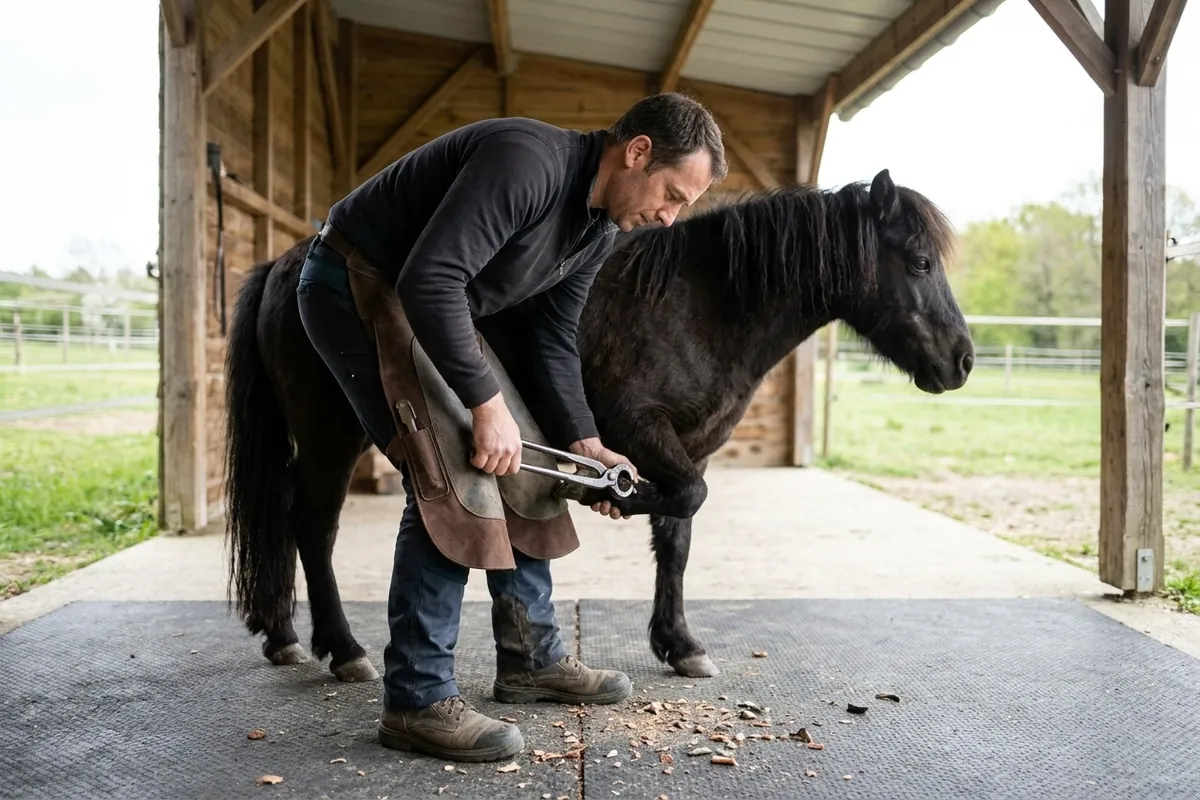
A farrier looks after the health, balance, and protection of your horse, pony, or donkey's hooves. They trim overgrown horn and shape shoes tailored to the conformation of each animal. Arranging a visit from a farrier in Florida ensures proper foot balance, helps prevent lameness, and keeps your equines sound for leisure or competition.
The pro travels straight to your barn or stables in a mobile workshop. To work effectively in Florida, they need a flat, clean, well‑lit area sheltered from the weather. Owners or barn managers should have the animal caught, dry, and ready on a lead rope, with any veterinary notes on hand if remedial work is required.
Your areaEverywhere in the United StatesYour request goes to the farriers around you.
Your request · Farrier
Which service do you need?
Free · No obligation
Farrier services
Common service
Hot shoeing
Hot shoeing involves searing a red‑hot shoe against the prepared hoof wall to ensure an exact fit. This beds the shoe down, burns away tiny uneven spots, and provides a stable, sealed surface. It is widely favored for working horses and competitive mounts on varied ground.
Free · No obligation
Common service
Steel shoeing
Fitting standard steel shoes protects hooves from premature wear and road bruising. The farrier trims and balances the foot before nailing on a shoe shaped to each hoof. This classic service is ideal for trail horses, lesson ponies, and general pleasure horses.
Free · No obligation
Common service
Basic trim
A basic trim shortens and rebalances the hooves of unshod equines. The pro levels the hoof wall, tidies the sole, and trims the frog to keep the limb correctly aligned. This routine care suits foals, retired horses, donkeys, and companion ponies turned out in pasture.
Free · No obligation
Common service
Abscess drainage
Treating a hoof abscess involves locating and draining trapped infection beneath the hoof horn. Using hoof testers and a loop knife, the farrier pares back the pocket to release pressure and relieve pain. Once drained, an antiseptic poultice and protective dressing can be applied.
Free · No obligation
Common service
Therapeutic shoeing
Therapeutic shoeing corrects or eases conformational issues, tendon strain, or joint disorders. The pro shapes specialized shoes, often using pads or dental impression material, alongside veterinary instructions. It helps manage conditions like navicular syndrome, ringbone, or chronic tendinitis.
Free · No obligation
Common service
Performance trim
A performance trim shapes the unshod hoof to support natural biomechanics and shock absorption. The farrier rolls the outer hoof wall and maintains frog‑ground contact for optimal movement. It suits barefoot horses, whether ridden bare or worked with hoof boots.
Free · No obligation
Common service
Sport horse shoeing
Sport horse shoeing relies on lightweight profiles, often in aluminum or with specific stud holes and clips. These shoes encourage a quick breakover and reduce strain on joints during strenuous work. They are popular for show jumpers, eventers, dressage horses, and racehorses.
Free · No obligation
Common service
Reverse shoeing
Reverse shoeing shifts the weight‑bearing area toward the back of the foot to ease pressure on the toe and dorsal structures. This remedial setup eases breakover and relieves tension on the deep digital flexor tendon. It is often recommended for laminitis or podotrochlear disease.
Free · No obligation
When to call a farrier
Is this your situation? A professional in your area calls you back to discuss it.Free · No obligation
Check the farrier's professional credentials, experience, and general liability insurance, which is important to protect your equine and property during appointments.
✓Ask about their experience working alongside equine vets for remedial or orthopedic shoeing.
✓A capable farrier takes time to watch your horse walk and trot up on a hard, flat surface before trimming or shoeing.
✓They communicate clearly and provide itemized receipts.
✓Be cautious of anyone who handles an anxious horse roughly, rushes hoof balance, or seems reluctant to explain their shoeing plan.
What affects the price of a farrier
The total price depends mainly on the points below. Your pro will give you a clear quote or estimate tailored to your horses before beginning work.
What affects the price
The service requested, from a simple trim to a full set of shoes
Materials required, such as aluminum shoes, pads, or hoof repair resin
The complexity of any remedial or veterinary‑prescribed shoeing
Travel distances to your barn or stables
Good to know
Price rules vary by state: the information on this page applies nationwide.
Get a call back from a farrier
For each service and each town, Kelki explains the essentials: the services, when to call a pro and pointers to choose well. With « Call me back », you describe your need in a few clicks: your request goes to a professional of the trade in your area, and you then deal with them directly.
Your requestFree
TradeFarrierLocationEverywhere in the United StatesJobTo chooseTimeframeYou choose
A pro in your area calls you back · free
Your area in Florida
Each area has its own page, followed by the largest towns and cities. Click a city: your request is sent with the right location.
Ask fellow horse owners locally for recommendations, read recent reviews, and compare quotes or estimates. You can also describe your requirements on Kelki—noting your location, number of horses, and whether you need routine trimming or full shoeing—to get a call back from an available local farrier.
Does the farrier in Florida travel to surrounding barns?+
Yes, farriers operate from fully fitted mobile workshops containing their forge and anvil, traveling out to local boarding stables, training barns, and private pastures. Travel costs can often be shared when several owners at the same barn book their appointments together.
How often should my horse be shod or trimmed?+
Most equines need attention every six to eight weeks, depending on hoof growth rate, season, and workload. Barefoot horses require regular trimming to prevent cracks and flares, while shod horses must have their shoes replaced or refitted before the hoof outgrows the shoe.
What is the difference between a basic trim and a performance trim?+
A basic trim levels the hoof wall, cleans the sole, and balances the foot for pasture‑kept horses, youngsters, or donkeys. A performance trim is tailored for barefoot ridden horses, rolling the edge of the hoof wall to prevent chipping and encourage correct biomechanics.
How should I prepare my horse for the farrier?+
Bring your horse in ahead of time so their legs and hooves are clean and completely dry. Provide a well‑fitting halter, a reliable lead rope, and a flat, dry, well‑lit workspace under cover, with a hard level surface where the farrier can assess foot balance safely.
Why choose hot shoeing over cold shoeing?+
Hot shoeing lets the farrier burn the hot shoe lightly against the hoof to see high spots, ensuring a flush, gap‑free fit against the hoof wall. It provides superior stability on ridden horses. Cold shoeing shapes the shoe entirely on the anvil, which works well for simple adjustments.
What should I do while waiting for the farrier if I suspect an abscess?+
Clean the foot gently with warm water and apply a warm, wet poultice or soak the hoof to help draw out the infection. Keep the horse rested on clean, dry bedding in a stall. Avoid cutting into the hoof horn yourself with sharp tools before a professional arrives.
Can a farrier fit remedial shoes recommended by my vet?+
Yes, farriers frequently work closely with equine veterinary practices. They use vet reports and digital X‑rays to assess foot angles, craft remedial or heart‑bar shoes, or apply specialized aluminum shoes and shock‑absorbing pads to assist recovery.
Need a farrier?? Get a call back.
Free · No obligation · Describe your need in a few clicks
FarrierFloridaFarrier request · Free · No obligationCall me back
Kelki AgentI connect you with pros in over 1,000 services, in the United States.
Hello, I’m the Kelki Agent. Tell me what you need: I’ll find the right pro for you, close to home.
Messages are analyzed by an AI to understand your need, and are not stored. Privacy
Cookies
We use cookies to improve your experience and analyze site traffic. About our cookies