Kelki searches.A robotics system integrator calls you back.
Free · No obligation · A few clicks
Your need in one click
31 M+companies in our trades in the United StatesYour request goes to the robotics system integrators in your area.
$0for your requestFree, no obligation, confirmed by you.
30 sto make your requestService, timeframe, town: a few clicks, and a professional calls you back.
Robotics System Integrator nearby
A robotics system integrator to design, program, and install your automated industrial cells.
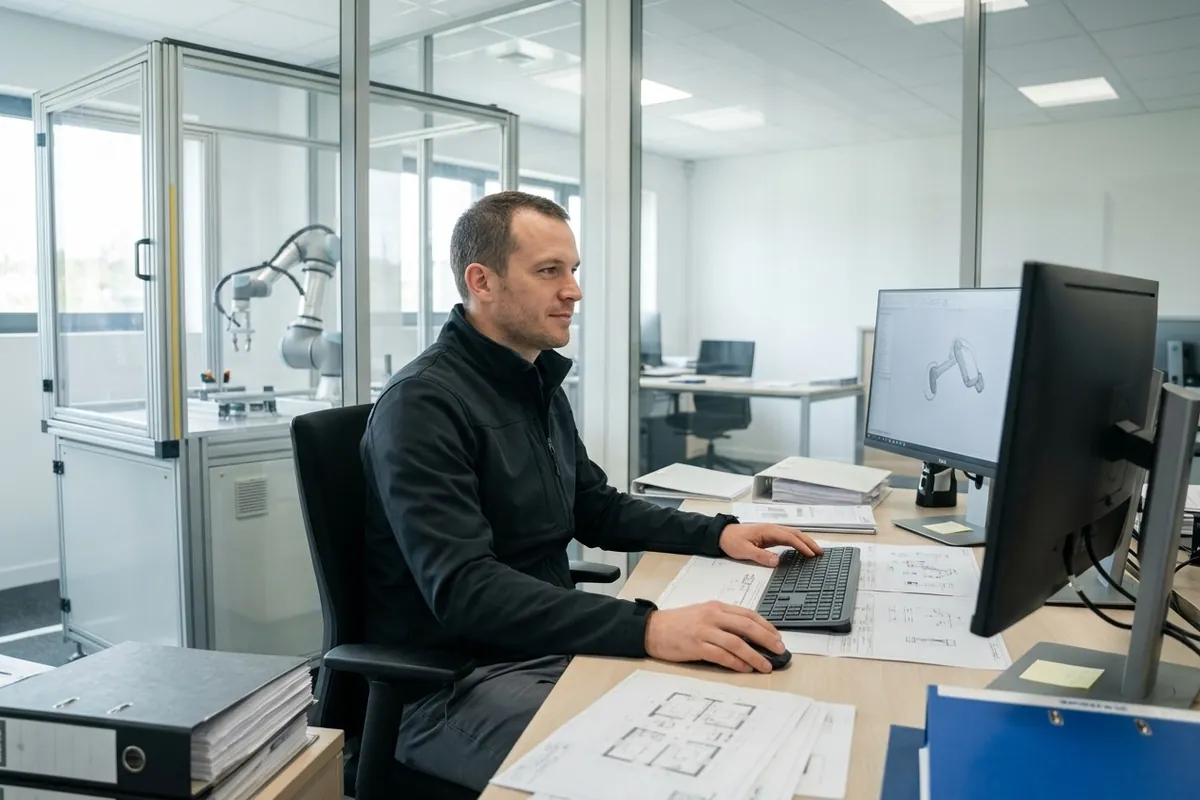
A robotics system integrator designs, builds, and programs automated cells for manufacturing and production facilities. They select the right articulated robot or cobot model to match your required cycle times. The pro sizes custom grippers, integrates sensors, and interfaces the robot with your factory PLCs. They also ensure the entire setup adheres strictly to workplace safety standards to safeguard your operators on the shop floor.
The project typically begins with an on‑site technical assessment to take measurements and review your plant layout. Engineering phases continue remotely through regular check‑ins and video calls. The integrator designs the cell in 3D and validates motions using simulation software. The team then returns to your facility for physical mounting, wiring, and final commissioning under production conditions.
Your areaEverywhere in the United StatesYour request goes to the robotics system integrators around you.
Your request · Robotics System Integrator
Which service do you need?
Free · No obligation
Industrial robotics services
Common service
Cobot installation
Cobot installation allows you to automate tasks without surrounding the workstation in bulky safety cages. The pro configures approach speeds, payload force limits, and safety zones so staff can work safely alongside the machine. Request this service to assist an operator with screwdriving, sanding, or packing tasks.
Free · No obligation
Common service
Palletizing robot integration
Palletizing robot integration automates the stacking of boxes, bags, or crates at the end of a line. The pro calculates payloads, fits end‑of‑arm tooling, and programs the pallet patterns. This service eliminates manual handling, reduces heavy lifting risks, and maintains a steady shipping flow.
Free · No obligation
Common service
Robot path programming
Robot path programming maps out the exact movements of the arm for a given task. The pro writes the code, fine‑tunes waypoints, and optimizes cycle times for speed and precision. Choose this service when launching a new product line or streamlining an existing robot's motion.
Free · No obligation
Common service
Machine vision integration
Machine vision integration enables your robot to locate loose components or carry out quality inspections. The pro fits cameras, sets up targeted lighting, and configures image‑processing algorithms to guide the arm. Use this service for automated sorting, pick‑and‑place guidance, or non‑contact dimensional checks.
Free · No obligation
Common service
Preventive robot maintenance
Preventive robot maintenance covers axis oil changes, cable harness checks, and system backups. The pro inspects gearboxes, tests for mechanical backlash, and verifies controller emergency stop circuits. Schedule this service based on operating hours or OEM guidelines to prevent costly mechanical breakdowns.
Free · No obligation
Common service
Emergency robot repair
Emergency robot repair gets a stalled machine running again during live production. The integrator diagnoses error codes on the controller cabinet, tests drives, and replaces failed components such as servomotors or circuit boards. Call for this whenever an unexpected fault shuts down an active line.
Free · No obligation
Common service
Robotic feasibility study
A robotic feasibility study evaluates the practical viability and payback of your planned automation project. The integrator analyzes your target throughput, models floor space in digital simulation, and calculates estimated ROI. Request this initial assessment before committing to significant capital expenditure.
Free · No obligation
Common service
Robot safety compliance
Robot safety compliance aligns your machinery with current OSHA regulations and RIA safety standards. The specialist carries out risk assessments, installs light curtains and interlocked guards, and compiles the technical documentation. This audit is essential whenever robot paths change or when commissioning a brand‑new cell.
Free · No obligation
When to call a robotics system integrator
K
Is this your situation? A professional in your area calls you back to discuss it.Free · No obligation
Start by reviewing the integrator's track record and case studies in your specific industry.
✓Request a detailed written estimate that clearly breaks down design, hardware, programming, and commissioning costs.
✓Ensure the proposal includes on‑site staff training and complete source code backups.
✓Ask about general liability insurance and professional liability coverage for automation engineering.
✓Inquire about their risk assessment methodology and the provision of the final machinery safety documentation.
✓Steer clear of vague proposals that fail to commit to target cycle times or omit full electrical and pneumatic schematics.
Cost factors for a robotics system integrator
The total cost depends primarily on the factors listed below. The exact price is the total amount estimated in writing by the professional for your specific project.
What affects the price
Type of robot chosen, whether collaborative or heavy industrial
Complexity of motion trajectories and machine vision algorithms
Custom end‑of‑arm tooling and mechanical grippers required
Scope of physical guarding, safety interlocks, and light curtains
Good to know
Price rules vary by state: the information on this page applies nationwide.
Get called back by a robotics system integrator
For each service and each town, Kelki explains the essentials: the services, when to call a pro and pointers to choose well. With « Call me back », you describe your need in a few clicks: your request goes to a professional of the trade in your area, and you then deal with them directly.
Your requestFree
TradeRobotics System IntegratorLocationEverywhere in the United StatesJobTo chooseTimeframeYou choose
A pro in your area calls you back · free
Your most common questions
How does a remote robotics integration project begin?+
The project starts by sharing your facility CAD layouts and 3D part files via a secure server. The integrator sets up an initial video call to review your specifications. They evaluate required throughput, floor space constraints, and interfaces with your existing machines before drafting a technical proposal.
What technical deliverables should the robotics integrator provide?+
The pro must provide a complete technical documentation package once commissioning is finished. This includes electrical schematics, mechanical gripper drawings, and fully annotated robot and PLC source code. They also supply user manuals for your maintenance team along with documented risk assessments.
How does the integrator safeguard proprietary engineering data?+
A mutual non‑disclosure agreement (NDA) is signed before exchanging any confidential technical files. Your CAD models, production volumes and manufacturing processes remain strictly your intellectual property. All shared data is stored on secure systems and used solely to engineer and program your cell.
How are progress reviews and milestone sign‑offs managed?+
Milestone reviews take place via video conference throughout the design phase. The integrator shares their screen to demonstrate 3D motion simulations and verify cycle times. These virtual reviews keep engineering choices on track without requiring unnecessary travel for your team.
What is the key difference between an industrial robot and a cobot?+
A traditional industrial robot operates at high speed and requires fixed perimeter fencing or optical barriers to isolate the work zone. A cobot features built‑in force‑torque sensors that limit kinetic energy upon contact, allowing it to share space with human workers subject to a validated risk assessment.
Who is responsible for the completed robot cell's safety compliance?+
The integrator assumes responsibility for the machinery safety compliance of the turnkey cell they supply and commission. They carry out the risk assessment against current safety standards and issue the formal documentation. If your team modifies software limits or tooling later, safety responsibility transfers to your company.
How long does physical on‑site commissioning take?+
On‑site installation time depends on cell complexity and how thoroughly trajectories were verified during initial simulation. Mechanical anchoring, wiring interlocks, and fine‑tuning vary with the number of connected peripheral machines. Final handover takes place once production cycle times and safety circuits are proven under live operating conditions.
Does the integration estimate include staff training?+
A comprehensive proposal clearly itemizes on‑site training for your operators and maintenance staff. This training covers operating the teach pendant, recovering from emergency stops, and changing end‑effectors. Always confirm this provision is detailed in the written estimate along with the scheduled hours.
Need a robotics system integrator?? Get a call back.
Free · No obligation · Describe your need in a few clicks
Robotics System IntegratorEverywhere in the United StatesRobotics system integrator request · Free · No obligationCall me back
K
Kelki AgentI connect you with pros in over 1,000 services, in the United States.
Hello, I’m the Kelki Agent. Tell me what you need: I’ll find the right pro for you, close to home.
Messages are analyzed by an AI to understand your need, and are not stored. Privacy
Cookies
We use cookies to improve your experience and analyze site traffic. About our cookies