Kelki searches.An HRV installer in Colorado calls you back.
100% free for you · No obligation
Your need in one click
Kelki targets the best
GoogleTrustpilot
Kelki targets the best
GoogleTrustpilot
31 M+companies in our trades in the United StatesYour request goes to the HRV installers in your area.
$0for you, 100% freeKelki is funded by the professionals. No obligation.
30 sto make your requestService, timeframe, town: a few clicks, and a professional calls you back.
HRV Installer nearby
Find an HRV Installer in Colorado for erv installation, repairs, or home ventilation upgrades.
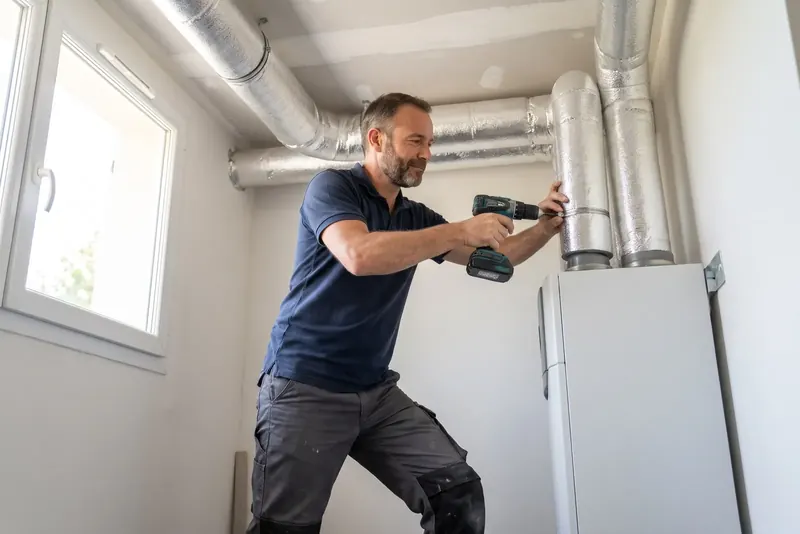
An HRV Installer handles professional erv installation and ongoing maintenance for properties in Colorado. These specialists size duct runs, mount the central heat recovery unit, and fit ceiling supply and exhaust registers. A balanced system delivers continuous fresh, filtered air throughout the home. It extracts moisture from kitchens and bathrooms while retaining heat through an efficient heat exchanger core.
Before starting an installation in Colorado, the pro conducts a detailed site survey. This assesses structural framing, joist bays, and the ideal mechanical room or attic space for the main unit. They core exterior penetrations, run rigid or semi‑rigid insulated ductwork, and handle the electrical connections. Once installed, they commission the system using an airflow hood to balance airflow rates across all rooms.
Your areaEverywhere in the United StatesYour request goes to the HRV installers around you.
Your request · HRV Installer
Which service do you need?
Free · No obligation
Ventilation and heat recovery services
Common service
HRV/ERV system installation
Full HRV/ERV installation includes mounting the central heat recovery unit, fitting distribution manifolds, and installing ceiling diffusers. The system exhausts stale indoor air to temper fresh incoming air without mixing the two airflows. Ideal for airtight new construction and deep retrofits to lower heating and cooling demands.
Free · No obligation
Common service
Whole‑house ventilation setup
This service covers continuous mechanical ventilation designed to balance fresh air and moisture removal. Suited to homes needing steady background airflow without separate supply ducts in every bedroom. The installer runs ductwork from bathrooms and utility rooms to an exterior exhaust hood, ensuring continuous air exchange.
Free · No obligation
Common service
Annual ventilation maintenance
Annual maintenance covers inspecting the heat recovery core, cleaning fan impellers, and verifying airflow balance. Regular maintenance keeps ductwork clean, prevents motor noise, and maintains energy efficiency. The pro also checks condensate drain lines to prevent clogs and leaks.
Free · No obligation
Common service
HRV filter replacement
Routine replacement covers fine particulate and MERV‑rated filters inside the main ventilation unit. Replacing clogged filters preserves indoor air quality in living spaces and protects the heat exchanger from dust buildup. The technician installs genuine, properly rated replacement filter media.
Free · No obligation
Common service
Ventilation motor repair
This work targets excessive vibration, humming bearings, or whistling sounds coming from the ventilation equipment. The pro inspects mounting brackets, cleans dust from fan impellers, and installs new vibration isolators or replacement blower motors to restore quiet operation.
Free · No obligation
Common service
Ventilation troubleshooting
Diagnostic and troubleshooting work identifies why a ventilation unit has stopped running or lost airflow. The pro tests power supplies, run capacitors, temperature sensors, and control boards. Faulty components are replaced promptly to restore ventilation and protect against moisture problems.
Free · No obligation
Common service
Retrofit ventilation installation
Retrofit installation integrates mechanical ventilation into existing homes with minimal disruption to finished spaces. The specialist routes compact ductwork through attics, drop ceilings, or custom soffits. They recommend compact, attic‑mounted or basement‑mounted units suited to traditional floor plans.
Free · No obligation
Common service
Bathroom ventilation
Dedicated bathroom ventilation involves installing a high‑efficiency exhaust fan or connecting the room to a central HRV system. It clears steam, prevents condensation, and stops black mold growth on walls and ceilings. The pro sets appropriate CFM airflow rates based on bathroom square footage and local building codes.
Free · No obligation
When to call an HRV Installer
Is this your situation? A professional in your area calls you back to discuss it.Free · No obligation
Request a clear written estimate detailing equipment make and model, heat exchanger efficiency, duct types, and register locations.
✓Prefer rigid metal or semi‑rigid radial ductwork over long runs of flexible ducting that can sag or crimp.
✓Confirm that the pro carries active liability insurance covering ventilation and electrical work.
✓Look for demonstrated experience with residential HRV and ERV systems and relevant trade credentials.
✓Ask how they calculate air changes per hour (ACH) and balance supply and exhaust airflows.
✓Avoid contractors who provide firm pricing without inspecting attic access, crawl spaces, or ceiling layouts.
What determines the cost of an HRV Installer
The total price depends primarily on the factors listed below. The final amount to pay is set out in the detailed written estimate provided by your pro for your specific property.
What affects the price
Chosen ventilation system type (HRV vs. ERV or exhaust‑only ventilation)
Length, diameter, and accessibility of the ductwork runs
Home design, whether new construction or an existing retrofit
CFM capacity, sensible recovery efficiency (SRE), and unit features
Good to know
Price rules vary by state: the information on this page applies nationwide.
Get a call back from an HRV Installer
For each service and each town, Kelki explains the essentials: the services, when to call a pro and pointers to choose well. With « Call me back », you describe your need in a few clicks: your request goes to a professional of the trade in your area, and you then deal with them directly.
Your request100% free
TradeHRV InstallerLocationEverywhere in the United StatesJobTo chooseTimeframeYou choose
A pro in your area calls you back · 100% free for you
Your area in Colorado
Each area has its own page, followed by the largest towns and cities. Click a city: your request is sent with the right location.
How can I find a reliable HRV installer in Colorado?+
To find an experienced pro in Colorado, describe your home and current ventilation needs on Kelki. A local specialist will call you back to discuss the project and arrange a site visit. This allows them to check duct pathways and ceiling cavities before providing an accurate estimate.
Do HRV installers based in Colorado serve surrounding communities?+
Yes, pros based in Colorado typically serve neighboring towns and surrounding counties across the area. Their service area can be confirmed during your initial call, and any travel fees will be outlined clearly in their written estimate.
What is the difference between an HRV and an ERV?+
A Heat Recovery Ventilator (HRV) transfers sensible heat between outgoing and incoming airstreams, ideal for cold, dry winters. An Energy Recovery Ventilator (ERV) transfers both heat and moisture, helping keep indoor humidity balanced in both humid summers and cold winters.
What documentation should I expect during an installation?+
Ask for proof of commercial liability insurance, along with an itemized written estimate specifying equipment models and duct materials. Once completed, request an airflow balancing report showing measured CFM at each register for code compliance.
How long does an HRV or ERV installation take?+
Installing a complete whole‑house HRV system in an average single‑family home usually takes two to four days. The timeline depends on access to attics or crawl spaces, the number of intake and exhaust points, and whether the job is new construction or a retrofit.
How often does a home HRV system need maintenance?+
A professional tune‑up is recommended every one to two years to inspect the heat exchanger core, clean blower wheels, and clear condensate drain lines. In addition, intake and exhaust air filters should be checked and cleaned or replaced every three to six months.
What factors influence the total installation cost?+
Costs depend on the CFM capacity and efficiency rating of the unit, ductwork materials (rigid sheet metal vs. semi‑rigid radial), and overall layout complexity. Tight attic or crawl space access, exterior wall coring, and framing soffits in finished spaces will also affect labor requirements.
Can an HRV system be installed in any home?+
An HRV requires dedicated space for the main unit, sound attenuators, and insulated supply and exhaust trunk lines. To achieve maximum energy savings, the house should also have reasonable air tightness, so drafty older homes may benefit from air sealing first.
How much does Kelki cost?+
Nothing: Kelki is 100% free for you. Describe what you need in a few clicks, a professional in your area calls you back and tells you their price. The service is funded by the professionals.
Need an HRV Installer?? Get a call back.
100% free for you · No obligation · Describe your need in a few clicks
HRV InstallerColoradoHRV installation request · 100% free for youCall me back
Kelki AgentI connect you with pros in over 1,000 services, in the United States.
Hello, I’m the Kelki Agent. Tell me what you need: I’ll find the right pro for you, close to home. It’s 100% free for you.
Messages are analyzed by an AI to understand your need, and are not stored. Privacy
Cookies
We use cookies to improve your experience and analyze site traffic. About our cookies