Kelki searches.A real‑Time 3D developer calls you back.
Free · No obligation · A few clicks
Your need in one click
2.2 M+companies in our trades in CanadaYour request goes to the real‑Time 3D developers in your area.
$0for your requestFree, no obligation, confirmed by you.
30 sto make your requestService, timeframe, town: a few clicks, and a professional calls you back.
Real‑Time 3D Developer nearby
An AR VR development company to design your professional immersive and interactive applications.
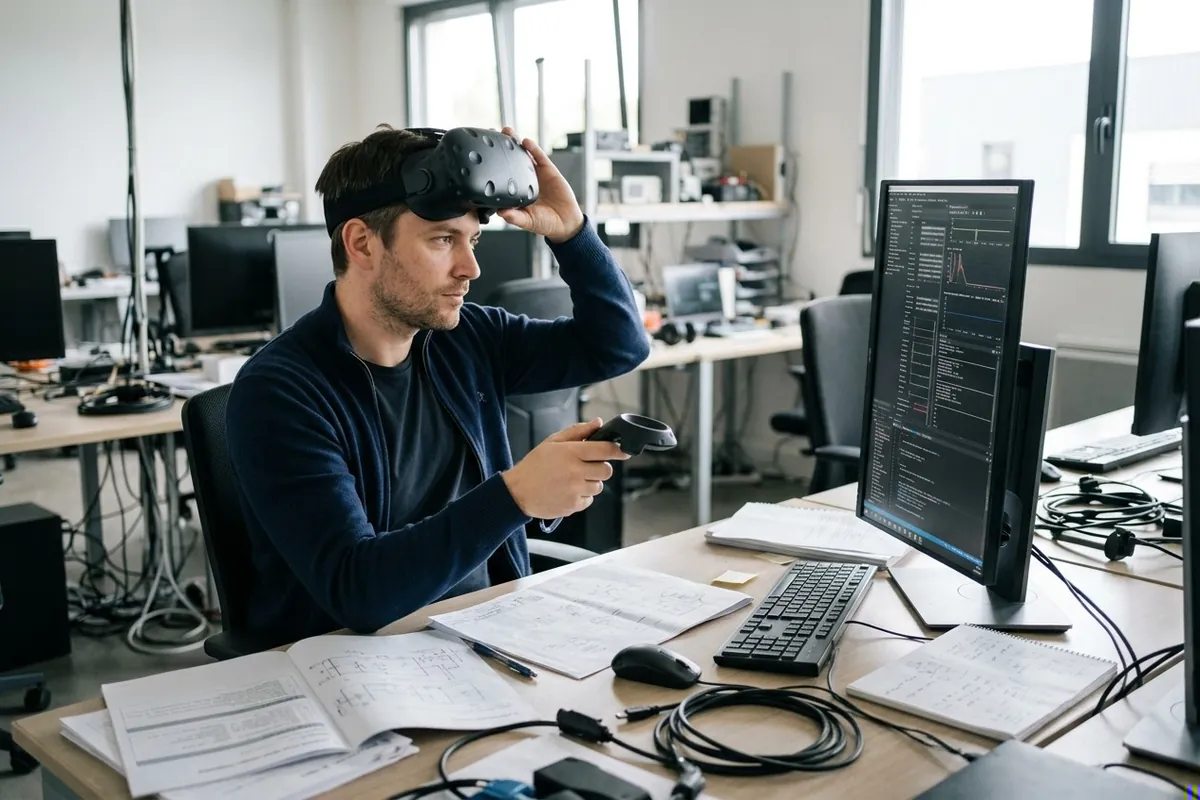
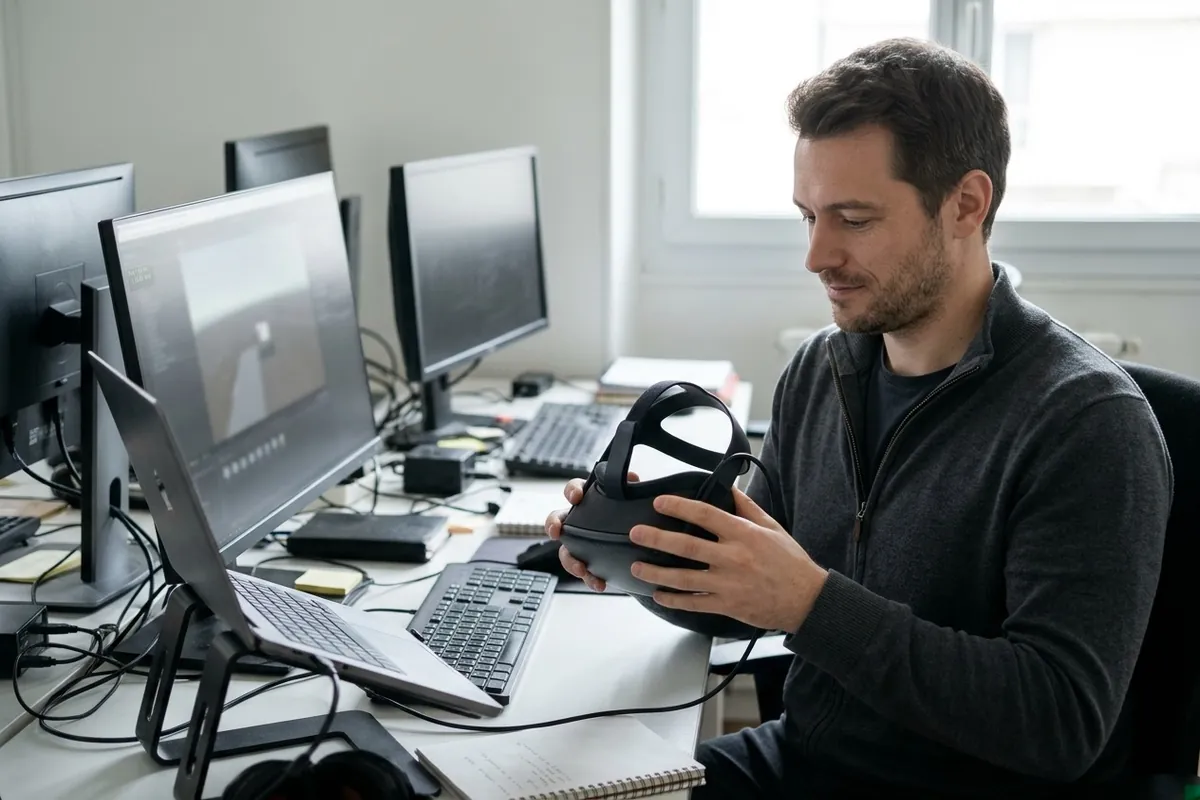
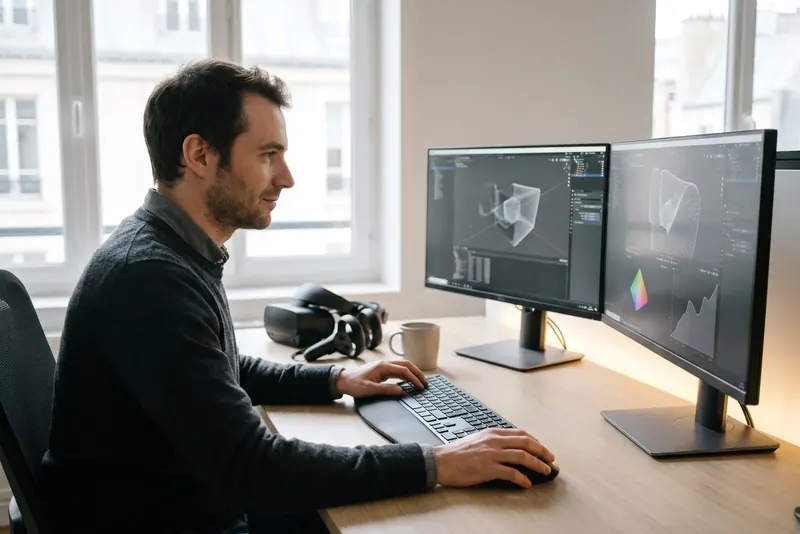
An AR VR development company or real‑time 3D developer programs interactive virtual environments for industry, retail, or training. They integrate three‑dimensional models, manage dynamic displays, and code the business logic. Their work runs on immersive headsets, mobile phones, or web browsers. This pro masters graphics engines, real‑time rendering, and systems programming.
Services are mainly provided remotely. The client provides the brief, mock‑ups, or raw graphic models via digital transfer. Validation stages are organized through video calls and shared screen demonstrations. The developer delivers intermediate executable versions for your internal testing. An in‑person meeting remains possible for the final deployment or testing on specific hardware.
Your areaEverywhere in CanadaYour request goes to the real‑Time 3D developers around you.
Your request · Real‑Time 3D Developer
Which service do you need?
Free · No obligation
3D development services
Common service
Custom VR application development
This service creates complete immersive software for virtual headsets based on your technical needs. It applies to training simulators, industrial building tours, or technical design reviews. The developer configures physical interactions, navigation, and the full scenario. You get an executable binary tested on your target hardware.
Free · No obligation
Common service
Interactive WebGL development
This service runs 3D scenes directly in a browser without installing extensions. It is useful for presenting technical innovations, data visualizations, or interactive showcases. The pro lightens geometries, programs animations, and optimizes lighting shaders. The result integrates easily into your existing web infrastructure.
Free · No obligation
Common service
3D product configurator
This service sets up a real‑time product customization tool for your customers. It meets the needs of e‑commerce, furniture, or industrial equipment. The developer connects assembly options, texture changes, and variant calculations. The module links with your commercial catalog or shopping cart.
Free · No obligation
Common service
Mobile AR app development
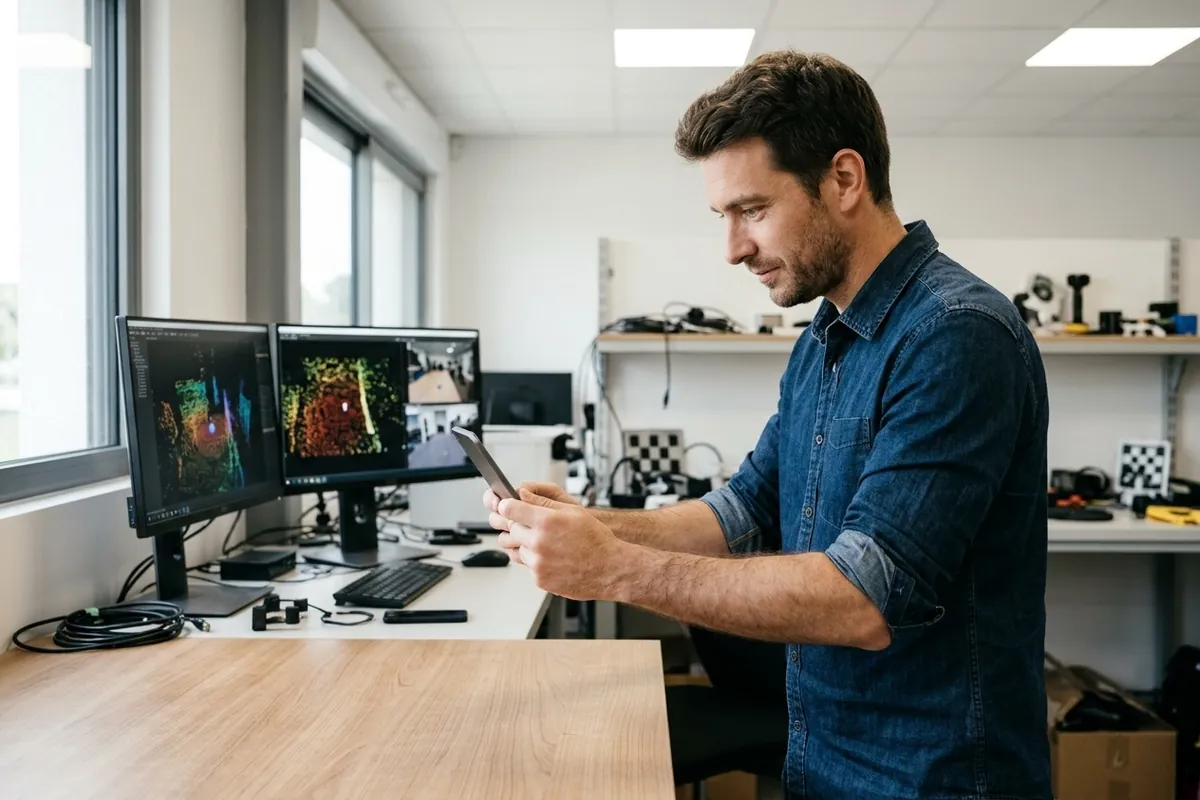
This service designs a mobile app overlaying virtual elements onto the real environment captured by a camera. It is used for technical maintenance assistance, cultural scenography, or virtual equipment try‑ons. The pro manages surface detection, spatial tracking, and display stability. The project is delivered ready for your device fleet.
Free · No obligation
Common service
Unity application development
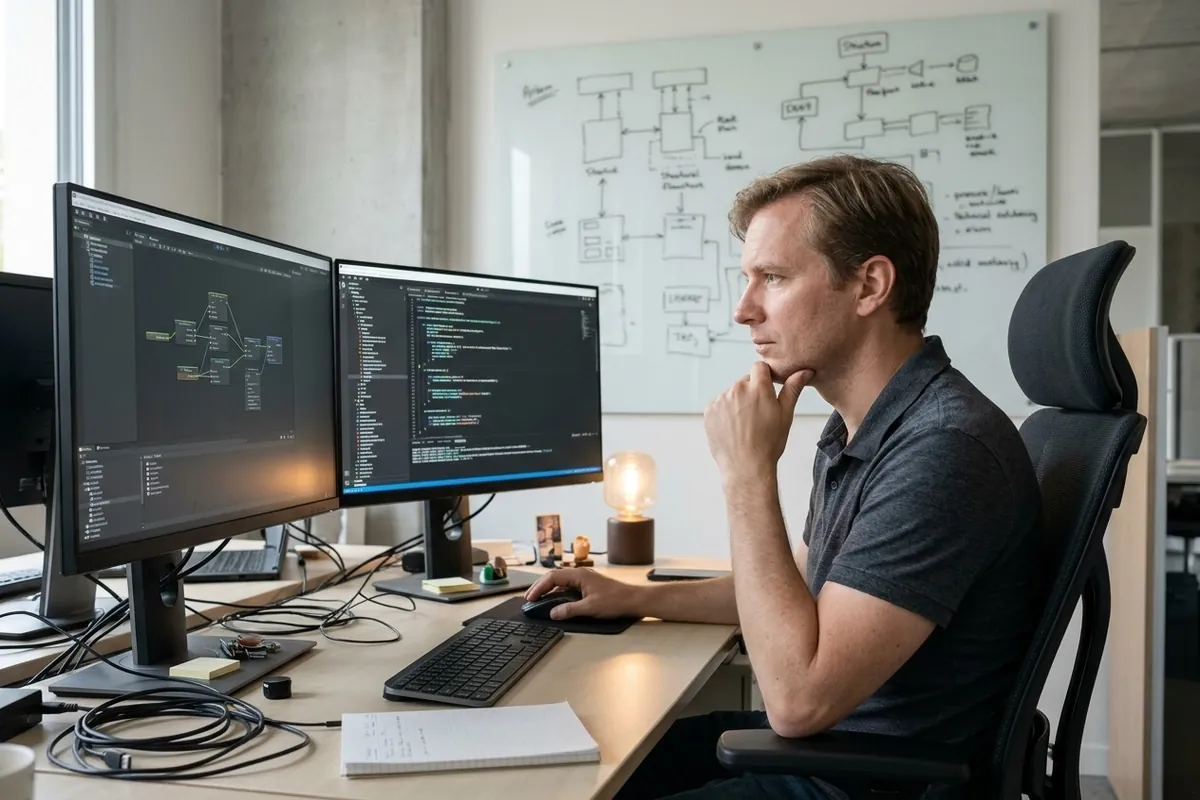
This service uses the Unity graphics engine to build your interactive multi‑platform project. It suits complex professional applications requiring high‑performance rendering on computer or mobile. The pro writes the code, structures the software architecture, and manages visual content integration. You receive a documented project and the agreed source code.
Free · No obligation
Common service
3D UI development
This service designs the visual ergonomics and usable menus within a three‑dimensional space. It is essential for guiding users in an immersive headset or complex simulation. The developer implements spatial buttons, contextual panels, and sensory feedback. This makes interaction intuitive during extended work sessions.
Free · No obligation
Common service
Web 3D deployment
This service ensures the online hosting and technical accessibility of your 3D application on a server. It happens after the creation phase to configure hosting, data compression, and browser compatibility. The pro checks the loading speed and behaviour across different screen setups. You get a fully functional link to view the project.
Free · No obligation
Common service
Standalone VR porting
This service adapts a virtual program designed for heavy computers to standalone wireless equipment. It is required to simplify your deployments at trade shows or mobile sessions. The pro reduces the complexity of polygonal models and recalibrates graphic calculations to maintain smooth performance. The app runs directly on the headset's built‑in processor.
Free · No obligation
When to call a Real‑Time 3D Developer
K
Is this your situation? A professional in your area calls you back to discuss it.Free · No obligation
To choose a Real‑Time 3D Developer, examine their concrete past work on platforms similar to your project.
✓Ask for a functional executable demonstration rather than just screenshots or pre‑rendered videos.
✓The estimate should detail the software architecture, delivery milestones, and source code intellectual property.
✓Clarify the management of geometric models: who provides the meshes and who handles their technical optimization.
✓Ask about the planned hardware compatibility testing protocols.
✓Be wary of vague proposals regarding display smoothness or 3D scene loading times.
✓A written contract should state the revision framework and application maintenance conditions.
What makes the price of a Real‑Time 3D Developer
The price depends mainly on the elements below. The exact price is the one the pro displays or writes on their estimate, drawn up for your needs.
What affects the price
Complexity of the programmed logical and physical interactions
Number and graphic fidelity of the integrated 3D models
Target platforms and hardware to consider
Need to optimize network loading times
Good to know
Price rules vary by province: the information on this page applies nationwide.
Get a call back from a Real‑Time 3D Developer
For each service and each town, Kelki explains the essentials: the services, when to call a pro and pointers to choose well. With « Call me back », you describe your need in a few clicks: your request goes to a professional of the trade in your area, and you then deal with them directly.
Your requestFree
TradeReal‑Time 3D DeveloperLocationEverywhere in CanadaServiceTo chooseTimeframeYou choose
A pro in your area calls you back · free
Your most common questions
How does remote collaboration work for a 3D project?+
Collaboration begins with a joint study of your technical specifications via video call. You share your work files through a secure exchange space. The developer sets up a schedule of validation stages. Each milestone involves a live demonstration or the delivery of a test version. Regular progress meetings allow features to be adjusted until the final software package is delivered.
What details should I provide to get an accurate estimate?+
Send a detailed description of the use case and expected interactive features. Indicate the target platforms: standalone headsets, phones, or web browsers. Specify whether you will provide the three‑dimensional geometric models or if the pro needs to design them. Mention your technical network or operating system constraints to evaluate the necessary development time.
How is the confidentiality of transmitted technical data protected?+
A non‑disclosure agreement is signed before sending sensitive documents or technical mock‑ups. This document governs the use of the transmitted data and prohibits external sharing. The service contract also specifies the storage and return conditions for the files. At the end of development, the transfer of intellectual property rights for the produced code is formally recorded in writing.
What deliverables does the developer provide at the end of the project?+
The pro provides the executable binary configured for your devices or the file folder ready for your web server. Depending on your contract terms, they hand over the complete documented source code and project scenes. Technical installation and operation documentation usually accompanies the files to make it easier for your internal teams or hosting provider to take over.
How can I test a VR or AR app without being in the same room?+
The developer compiles executable test versions and sends them to you via secure download. Your team installs the file on their own headsets or mobile devices to run real‑world checks. Feedback is given in writing or during a shared video session, with a video feed from the headset to the computer screen to analyze live behaviour.
Who provides the 3D models and textures for the application?+
You can provide your own files from computer‑aided design or imaging software. The developer then cleans, converts, and optimizes these meshes for real‑time use. If you do not have any visual assets, the pro can model the necessary objects or integrate standard technical resources as defined in your initial order.
What is the difference between pre‑rendered and real‑time?+
Pre‑rendered output generates a static image or fixed video that does not react to user actions. Conversely, real‑time recalculates the image dozens of times per second based on the user's viewpoint and interactions. This approach requires rigorous programming to maintain a smooth display speed, avoiding any visual discomfort in a headset or browser.
How is the interactive application maintained?+
The initial estimate may include a period for fixing technical bugs after launch. Beyond that, a maintenance contract governs necessary work during operating system, headset, or browser updates. The developer then adapts the code to maintain hardware compatibility and fix any issues linked to the evolution of the running platforms.
Need a Real‑Time 3D Developer?? Get a call back.
Free · No obligation · Describe your need in a few clicks
Real-Time 3D DeveloperEverywhere in CanadaReal-Time 3D Developer request · Free · No obligationCall me back
K
Kelki AgentI connect you with pros in over 1,000 trades, in Canada.
Hello, I’m the Kelki Agent. Tell me what you need: I’ll find the right pro for you, close to home.
Messages are analyzed by an AI to understand your need, and are not stored. Privacy
Cookies
We use cookies to improve your experience and analyze site traffic. About our cookies