What qualifications must a sailing instructor hold in Oise?+
A professional instructor teaching for remuneration in France must hold a recognised French qualification. Common credentials include the BPJEPS with a sailing endorsement or a state sports instructor diploma. Seasonal club leaders may hold a CQP sailing initiator credential under supervision. Instructors must possess an up‑to‑date sports professional card issued by French authorities.
Can an instructor coach me aboard my own boat in Oise?+
Yes, many instructors offer tailored coaching directly on your own yacht or dayboat. This approach allows you to adjust deck layout, calibrate instruments and master manoeuvres on your specific vessel. Before casting off, your instructor will inspect mandatory safety equipment and check your valid marine insurance policy.
What happens if weather conditions turn bad?+
Your instructor reviews marine forecasts and sea state data prior to departure. If winds are too severe, sea conditions hazardous, or thunderstorms forecast, the on‑water session is cancelled for safety. Depending on prior booking terms, the lesson is rescheduled or converted into a shore‑based theory class on meteorology and navigation.
What personal gear should I bring for a sailing lesson?+
Wear comfortable clothing suited to wind and air temperatures. Pack a windproof waterproof jacket, non‑marking non‑slip closed footwear, sunglasses with a safety strap, and sun protection. For dinghies, catamarans or board sports, a neoprene wetsuit is often needed. Buoyancy aids and life jackets are systematically supplied by the instructor.
What is the difference between a sailing instructor and a skipper?+
A sailing instructor focuses on teaching boat handling, theory and seamanship so you can skipper independently. A commercial skipper, on the other hand, takes full nautical command and operational responsibility for the yacht and passengers during transfers or coastal holidays, without formal teaching duties.
Is swimming ability mandatory before taking sailing lessons?+
Yes, being able to swim is required for all supervised watersports activities. A swimming declaration or water comfort test is typically requested upon registration. While wearing an approved buoyancy aid remains compulsory afloat, swimming ability ensures calm and safe reactions should you capsize or fall overboard.
How is a typical sailing lesson structured?+
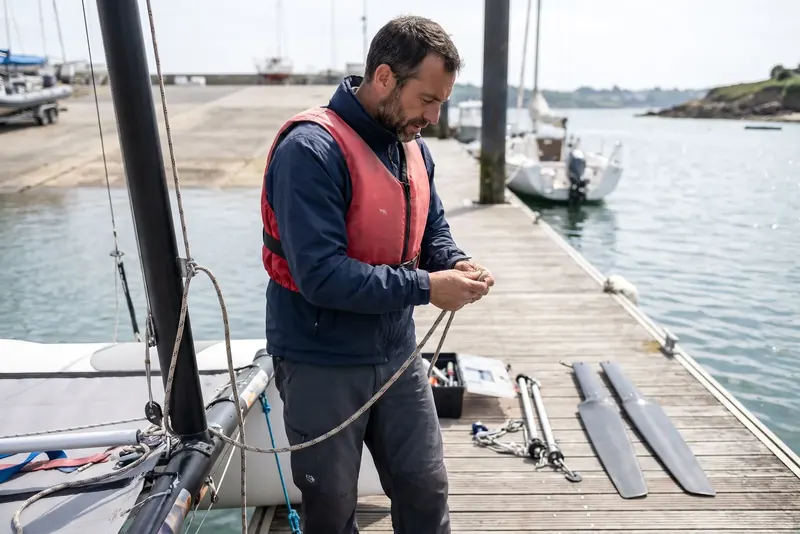
A session starts on shore with a weather check, safety briefing and explanation of the day's training goals. You then assist with rigging and preparing the boat. Practical drills afloat cover steering, sail trim and manoeuvres. The lesson finishes with de‑rigging, boat washdown and an analytical progress debrief.
How can I find a reliable instructor and what influences the price?+
To find a reliable instructor, ask local boaters for recommendations, read recent client reviews, compare written quotes, and describe your goals on Kelki to be contacted directly by an available pro in your area. Pricing depends on private tuition versus group courses, the boat model (cruising keelboat vs light dinghy), fuel, and provided gear.